How Montessori Preschool Near Me Supports Social and Emotional Development in Early Childhood
When parents search for a “Montessori preschool near me,” they are looking for more than academics. They want a safe, nurturing environment where their child can build confidence, make friends and learn life skills in the early years.
That’s where social and emotional development comes in.
A child’s ability to express emotions, build relationships, solve problems and regulate feelings affects every part of life. Research shows that children with strong social and emotional skills do better academically, have healthier relationships and grow into resilient adults.
Montessori education takes a whole child approach that supports emotional development just as much as academic growth. Through hands-on learning, mixed age groups, peaceful conflict resolution and individualized lessons, Montessori classrooms create an environment where children feel safe, valued and motivated to learn.
If you are looking for a Montessori preschool program or researching the best Preschool Alexandria VA options for your family, understanding how the Montessori method supports emotional well being can help you make the right decision for your child’s future.
In this blog, we’ll dive deep into the benefits of Montessori education, specifically its focus on early childhood development. We’ll explore how Montessori classrooms foster emotional, social, and cognitive growth, and why the Montessori method is the key to your child’s future success.
Why Social and Emotional Development Matters in Early Childhood
Social and emotional development means a child can:
- Recognize and manage emotions
- Build positive relationships
- Develop empathy
- Solve social problems
- Communicate effectively
- Build self confidence
These foundational skills start to develop in early childhood and continue throughout life.
In high quality Montessori programs children are encouraged to express feelings respectfully while learning to navigate social situations independently.
Strong emotional development also impacts:
- Academic success
- Classroom participation
- Attention span
- Motivation
- Problem solving abilities
- Mental health and resilience
Research shows children with strong social emotional skills have better attendance, stronger academic performance and healthier relationships later in life.
The American Montessori Society is a leading organization that outlines the essential elements and standards for authentic Montessori early childhood education, promoting a prepared environment and child independence.
The focus is on empowering children to become confident, independent, and self-motivated learners, which is a strong foundation for success both in and outside of the classroom. Engaging families as active participants in the Montessori educational process is also vital, fostering a supportive and collaborative community for each child’s development.
What Makes Montessori Education Different?
The Montessori method was developed by Maria Montessori over 100 years ago. Unlike traditional classrooms that often follow a fixed learning structure, Montessori education emphasizes independence, hands-on learning and self-directed exploration.
Students work at their own pace using tactile materials designed to support learning, creativity and personal growth. This encourages intrinsic motivation and helps young learners build confidence through independent discovery. In Montessori classrooms the teacher’s role is to guide and observe rather than direct every activity. This helps Montessori students become active participants in their own learning journey and develop strong problem solving and decision making skills.
By enrolling your child in a Montessori preschool near me or a Montessori preschool program, you’re giving them the opportunity to thrive in an environment where they can develop at their own pace while also being guided by experienced educators.
Montessori Classroom Features
- Mixed age groups that promote peer learning
- Open shelves with easily accessible materials
- Uninterrupted blocks of learning time
- Hands on activities connected to real life
- Individualized lessons based on learning style
- Peaceful classroom environment focused on respect and cooperation
These elements create an environment where children naturally develop social and emotional skills while learning academics.
How Montessori Supports Social and Emotional Development
1. Independence Builds Self Confidence
One of the biggest benefits of Montessori education is independence.
In a Montessori preschool children are encouraged to do tasks on their own from pouring water to cleaning up materials after lessons. These practical life activities may seem simple but help children build self esteem and confidence.
Instead of external rewards children feel internally motivated by accomplishment and personal growth.
When young learners complete real life activities independently they begin to trust themselves. This confidence carries over into social situations, emotional regulation and academic learning.
For example a child who can solve small daily challenges independently is often more willing to participate in group discussions, interact with peers and try new activities.
2. Mixed Age Groups Encourage Empathy and Leadership
Montessori classrooms often have mixed age groups of three years. Younger children observe and learn from older students, while older students become role models and mentors.
This structure creates a sense of community.
In many traditional schools children only interact with peers their own age. In Montessori schools younger students gain confidence from observing advanced work while older children develop patience, empathy and leadership skills.
This environment naturally supports social development because children learn to:
- Help one another
- Communicate respectfully
- Resolve conflicts peacefully
- Work together
- Practice empathy daily
The Children’s House model, also known as Casa dei Bambini, was designed to foster independence and cooperation among children in the early years.
Hands On Learning Supports Emotional Growth
Children learn best through hands-on experiences.
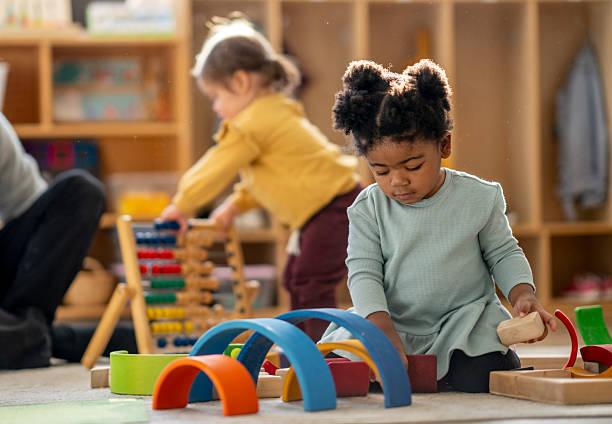
Montessori preschool learning uses tactile materials like golden beads, sandpaper letters, sensorial learning tools and practical life exercises that engage multiple senses. These self-correcting materials allow children to recognize mistakes independently without fear of criticism. This reduces anxiety and encourages problem solving.
When children are free to explore materials at their own pace they develop:
- Patience
- Persistence
- Concentration
- Emotional regulation
- Critical thinking
Instead of feeling pressured to compete with classmates, children focus on their own growth and progress.
This creates a positive relationship with learning that supports emotional well being.
The Importance of a Peaceful Classroom Environment
The classroom environment plays a big role in social and emotional development.
Montessori classrooms are designed to feel calm, organized and welcoming. Materials are placed on open shelves, spaces are child sized and routines are consistent throughout the day.
A predictable environment helps children feel emotionally secure.
When children know what to expect they are more comfortable participating socially and taking academic risks.
Teachers also model respectful communication and peaceful conflict resolution. Instead of punishing children harshly for mistakes Montessori educators guide children towards understanding emotions and making thoughtful choices.
This supportive teaching style helps children:
- Label and understand feelings
- Build emotional awareness
- Develop self control
- Practice empathy
- Strengthen relationships
Why Play is Important for Emotional Development
Play is one of the most important parts of early childhood development.
Through play children practice negotiation, communication, cooperation and empathy. Montessori programs encourage purposeful play through hands-on activities that combine creativity and learning.
For example:
- Group activities teach teamwork
-
- Practical life lessons develop responsibility
- Sensorial learning strengthens focus and observation
Children also learn by observing adults and peers. In Montessori kindergarten and preschool classrooms teachers model calm behavior, kindness and respectful communication daily.
This modeling becomes a powerful tool for emotional learning.
Individualized Learning Helps Children Succeed
Every child develops differently.
One child may excel in language while another prefers math concepts or sensorial learning. Montessori education recognizes these differences and adapts lessons to each child’s interests, abilities and developmental stage.
Individualized learning plans support emotional well being because children don’t feel pressured to keep up with an entire class moving at the same speed.
Instead, students progress at their own pace in a supportive and encouraging environment.
This reduces frustration and builds confidence.
A child who struggles in a rigid traditional classroom may thrive in a Montessori preschool program because the environment respects different learning styles and developmental timelines.
Montessori Kindergarten Prepares Children for Long Term Success
The kindergarten year in Montessori is especially powerful because children become leaders in the classroom.
By the third year in a Montessori classroom children are often:
- More independent
- Better communicators
- Emotionally resilient
- Comfortable helping younger children
- More prepared academically
Research shows Montessori students often have strong executive functioning skills, emotional regulation and problem solving abilities compared to peers in traditional school settings.
The whole child focus prepares students not only for first grade but for life.
Signs Your Child May Benefit From a Montessori Preschool
Every child learns and develops differently. Some children thrive in traditional classrooms while others benefit from a calmer, more individualized environment.
Your child may benefit from a Montessori preschool program if they:
- Struggle with separation anxiety
- Get overwhelmed in large group settings
- Need more hands on learning
- Prefer learning at their own pace
- Need help building self confidence
- Show curiosity through independent exploration
Montessori classrooms provide a safe space where children feel respected, capable and emotionally secure during the early years.
How to Choose the Best Montessori Preschool Near Me
If you are researching private Montessori schools or looking for the best Montessori preschool in your area there are several things to consider.
Look for Authentic Montessori Programs
A good Montessori school should have:
- Certified Montessori teachers
- Hands on Montessori materials
- Mixed age classrooms
- Individualized lessons
- Uninterrupted learning periods
- Focus on practical life and emotional development
Visit the Classroom
Observe how teachers interact with students.
Do children appear calm, engaged and independent?
Is the environment organized and welcoming?
Do teachers guide instead of control the whole class?
These observations will tell you a lot about the school culture.
Consider Community and Family Involvement
Strong Montessori communities often have collaboration between teachers and families.
Consistent support between home and school helps reinforce emotional development and learning.
If you are looking for Preschool Alexandria VA or a Montessori preschool Alexandria VA program, visiting classrooms and asking good questions will help you find the right fit for your child.
Montessori Education vs Traditional Preschool
Montessori Preschool | Traditional Preschool |
Child directed learning | Teacher directed instruction |
Mixed age groups | Same age classrooms |
Hands on learning materials | Worksheets and group lessons |
Focus on independence | Focus on compliance |
Individualized pace | Standardized pace |
Peaceful conflict resolution | Adult directed discipline |
Intrinsic motivation | External rewards |
While both models can support children, many parents choose Montessori education because it prioritizes independence, emotional growth, and personalized learning.
FAQs About Montessori Social and Emotional Development
How does Montessori support social and emotional development?
Montessori classrooms encourage independence, empathy, communication and peaceful conflict resolution. Children learn emotional regulation through hands-on learning, consistent routines and respectful interactions.
Why is emotional development important in early childhood?
Emotional development helps children build confidence, form relationships, manage stress and succeed academically. These skills lay the foundation for lifelong learning and mental well being.
What makes a Montessori preschool different?
A Montessori preschool focuses on self-directed learning, mixed age classrooms, hands-on materials and individualized instruction rather than standardized teaching methods.
Is Montessori helpful for shy or sensitive children?
Yes. Montessori classrooms provide calm, predictable environments where children feel safe and secure. The individualized pace allows shy children to build confidence over time.
How do I choose the best Montessori preschool near me?
Look for authentic Montessori programs with trained teachers, prepared classrooms, hands on materials and strong focus on social and emotional development.
Conclusion
Social and emotional development is one of the most important parts of a child’s early years. The ability to communicate, regulate emotions, solve problems and build meaningful relationships affects success in school and life.
That’s why so many families searching for a Montessori preschool near me are choosing Montessori.
Through hands-on learning, practical life, mixed age classrooms and individualized instruction Montessori classrooms support the whole child academically, socially and emotionally.
Whether you are looking for a Montessori preschool program, researching private Montessori schools or comparing preschool Alexandria VA options, choosing a nurturing environment focused on emotional development can make a big difference in your child’s future.
Ready to learn more about Montessori and your child’s development? Explore programs at Montesshare and see how Montessori can help your child grow with confidence, curiosity and compassion.