Why Montessori Early Childhood Education is the Key to Your Child’s Success
When it comes to your child’s development, finding the right educational approach is crucial. As a parent, you want nothing but the best for your child’s future, and one of the most important decisions you’ll make is choosing the right educational path. In the early years, Montessori early childhood education offers a unique approach that encourages children to grow academically, socially, and emotionally. Montessori early childhood education is one of the most effective and widely recognized methods for nurturing children’s growth, learning, and success. With Montessori, children begin a joyful and foundational learning experience that sets the stage for lifelong curiosity and development. But what exactly makes Montessori education so powerful, and why should you consider it for your child?
In this blog, we’ll dive deep into the benefits of Montessori education, specifically its focus on early childhood development. We’ll explore how Montessori classrooms foster emotional, social, and cognitive growth, and why the Montessori method is the key to your child’s future success.
The Importance of Montessori Early Childhood Education
Montessori early childhood education is more than just a teaching style, it’s a philosophy that focuses on respect for children, independence, and a love for learning. Developed by Dr. Maria Montessori over a century ago, this approach places the child at the center of their educational journey.
The American Montessori Society is a leading organization that outlines the essential elements and standards for authentic Montessori early childhood education, promoting a prepared environment and child independence.
The focus is on empowering children to become confident, independent, and self-motivated learners, which is a strong foundation for success both in and outside of the classroom. Engaging families as active participants in the Montessori educational process is also vital, fostering a supportive and collaborative community for each child’s development.
Why Early Childhood Education Matters
Early childhood is a critical period for development, and research shows that the early years of life play a significant role in shaping a child’s academic, emotional, and social skills. Montessori early childhood education recognizes the importance of development from birth, emphasizing Dr. Montessori’s concept of the Absorbent Mind, which posits that young children effortlessly absorb knowledge from their environment during this formative stage. A strong early education foundation sets the stage for future success in school and beyond. Studies show that children who receive high-quality early childhood education are more likely to succeed in school, graduate, and lead fulfilling lives. Montessori’s focus on independence, emotional regulation, and social skills creates a solid foundation for future success. Learn more about the importance of early childhood education at the U.S. Department of Education. Montessori early childhood education harnesses the power of this stage to build key life skills, including problem-solving, emotional regulation, independence, and self-confidence.
By enrolling your child in a Montessori preschool near me or a Montessori preschool program, you’re giving them the opportunity to thrive in an environment where they can develop at their own pace while also being guided by experienced educators.
What Sets Montessori Education Apart?
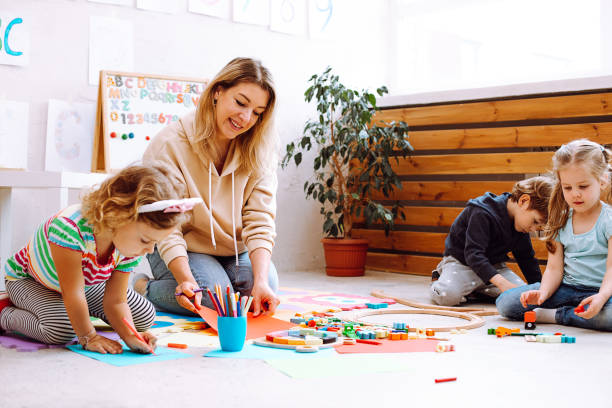
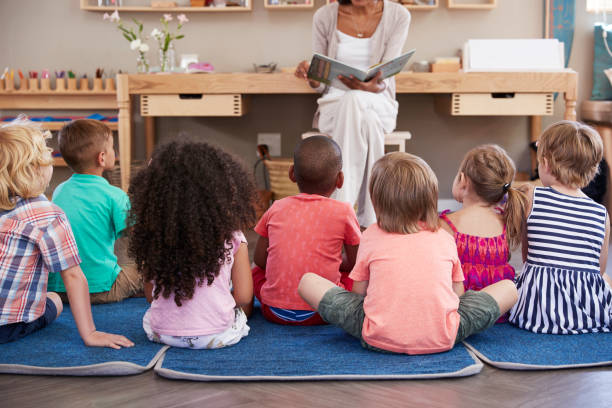
At the heart of Montessori early childhood education is a thoughtfully prepared environment. Montessori classrooms feature child-sized tables, chairs, and materials on open shelves, all easily accessible to encourage independent, hands-on learning. Here’s what makes the Montessori approach unique:
1. Child-Centered Learning
Children in a Montessori preschool freely choose activities that interest them. Teachers tailor lessons to each child’s developmental stage and interests, guiding and observing rather than directing. This autonomy fosters confidence and independence.
2. Hands-On Learning
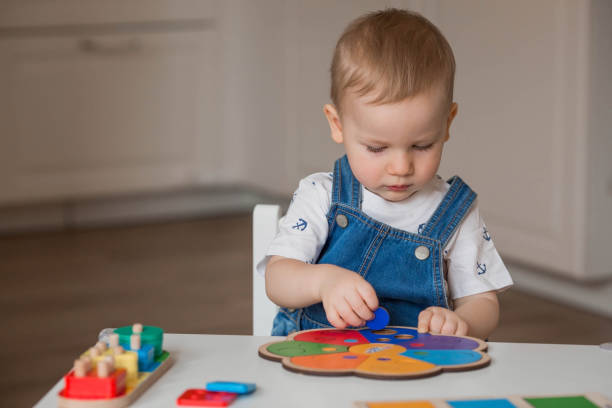
Montessori students engage with tactile learning materials that connect abstract concepts to real-life experiences. Practical Life activities build daily-life skills and coordination, while Sensorial lessons refine perception, laying the groundwork for other learning areas like math.
3. Individualized Pace
Mixed-age classrooms, often spanning three years, encourage peer collaboration and leadership. Children explore topics at their own pace without pressure to meet arbitrary milestones, deepening understanding and achievement.
4. Emotional and Social Growth
Older students mentor younger ones, promoting a collaborative community. Children develop patience, self-control, and conflict resolution skills as they share materials and interact respectfully. In Montessori Kindergarten, leadership and citizenship skills flourish, reinforcing community bonds and self-esteem.
The Montessori Method: A Foundation for Lifelong Success
The Montessori Method is specifically designed to support the developmental needs of very young children, including infants, Primary or preschool children – all of our youngest learners. During these formative years, children experience rapid growth and change. Montessori programs for infants and preschool-aged children, such as Nido and Parent-Infant classes, provide environments and activities that foster early development, independence, and movement through age-appropriate materials. The Early Childhood curriculum offers five areas of study: Practical Life, Sensorial, Math, Language, and Cultural Studies. The Montessori approach provides a safe, nurturing environment where Primary or preschool children can develop vital skills such as:
* Independence
Preschoolers are encouraged to do things for themselves, like putting on their own shoes or cleaning up after themselves. This fosters a sense of autonomy and accomplishment.
* Fine and Gross Motor Skills
Activities like pouring, sorting, and stacking help improve motor coordination and dexterity. These tasks, combined with physical play, enhance both fine and gross motor development.
* Social Skills
In a Montessori preschool program, children interact with both their peers and teachers in a respectful environment. These interactions help children develop empathy, patience, and the ability to express themselves clearly.
As preschoolers engage in hands-on activities, they also develop cognitive skills, building the foundation for later academic success.
The Role of Montessori Preschool in Social and Emotional Development
Social and emotional development is another cornerstone of Montessori education. A Montessori preschool near me offers a structured yet flexible environment where children can develop empathy, self-regulation, and positive social interactions.
In Montessori early childhood education, kindergarten serves as the culmination of the Early Childhood program, providing a crucial year for children to reinforce their learning, develop leadership skills, and prepare for the transition to elementary education.
1. Emotional Regulation
Montessori classrooms encourage children to recognize their emotions and express them in a healthy, constructive way. Teachers model calmness and respect, teaching children how to handle their emotions, which sets them up for better emotional well-being throughout their lives.
2. Building Self-Confidence
Children in a Montessori setting are allowed to make choices and take responsibility for their learning. This autonomy boosts self-esteem and creates a sense of accomplishment. By learning to make decisions and solve problems independently, children grow into confident, self-assured individuals.
3. Conflict Resolution
Montessori education emphasizes the importance of peaceful conflict resolution. Teachers guide children through disputes, helping them find solutions by encouraging communication and understanding. These skills benefit children not just in school but throughout their lives as they navigate relationships and challenges.
Benefits of Montessori Education for School Success
Montessori early childhood education, including programs like Montessori preschool Alexandria VA and Montessori preschool programs, lay a strong foundation for lifelong success. Montessori kindergarten and pre-K focus on independence, leadership, and hands-on learning with Montessori materials, preparing children for academic and social achievement. Many families opt for private Montessori schools, which closely follow Maria Montessori’s original principles, setting them apart from public and/or traditional options. Research shows Montessori students often excel in self-regulation, concentration, and problem-solving, outperforming peers in traditional settings. The method also discourages conventional achievement measures like grades and tests.
1. Academic Success
Montessori students typically perform better academically, with strong skills in math, reading, and writing developed through tactile, hands-on materials. They learn numerals, place-value, and basic math operations while language activities build vocabulary and writing skills, such as tracing sandpaper letters and practicing letter sounds. These experiences help children enter kindergarten with advanced reading and math abilities and foster critical thinking and independent learning.
2. Enhanced Social Skills
Montessori education equally nurtures intellectual, physical, emotional, and social growth. Collaborative learning and Cultural Studies, covering history, geography, science, art, and music, promote communication skills. Children also develop an appreciation for diversity, helping children thrive socially and academically.
3. Lifelong Love of Learning
Montessori fosters curiosity and deep exploration, inspiring children to become lifelong learners who engage passionately with subjects of interest.
Finding a Montessori Preschool Near Me
If you’re wondering, “Where can I find a Montessori preschool near me?” you’re not alone. Many parents are turning to Montessori education for their children’s early learning years. Whether you’re searching for a home-based preschool or a larger Montessori school, there are many resources available to help you find the right fit for your family.
Consider looking for preschools that:
- Offer a curriculum based on Montessori principles
- Have certified Montessori teachers who are trained in the Method
- Provide a safe, nurturing, and thoughtfully prepared environment
- Offer a variety of learning materials that promote hands-on learning
Use online search tools and ask other parents in your community for recommendations. Once you’ve narrowed down your options, schedule a tour to visit the classroom environment and meet with teachers.
Practical Tips for Parents Considering Montessori Education
If you’re thinking about enrolling your child in a Montessori program, here are a few tips to help you make the best choice:
* Research Montessori Programs
Familiarize yourself with the principles of Montessori education. Look for schools that align with the values you want for your child’s development.
* Visit the Classroom
Observe how the teacher interacts with the students, how the classroom is organized, and the types of activities offered. A well-prepared Montessori classroom will be rich with materials and encourage independent exploration.
* Speak with Teachers
Talk to the teachers about their approach to emotional and social development. Montessori educators should be able to explain how they support each child’s emotional growth in a nurturing and respectful way.
FAQs About Montessori Early Childhood Education
1. What is Montessori early childhood education?
Montessori early childhood education is a child-centered approach that emphasizes independence, respect, and a love for learning. It encourages hands-on learning and allows children to develop at their own pace in a thoughtfully prepared environment.
2. How does Montessori benefit preschoolers?
Montessori programs for preschoolers help develop independence, motor skills, social skills, and emotional regulation. The hands-on learning experiences allow preschool-aged children to explore and learn in a way that fosters confidence and curiosity.
3. Why is Montessori education better for my child?
Montessori education fosters critical thinking, emotional intelligence, independence, and self-confidence. Children who experience this Method often excel academically and socially throughout their lives.
Research indicates that adults who attended Montessori schools experience improved well-being, social trust, and self-confidence.
Conclusion: Give Your Child the Gift of Montessori Education
Montessori early childhood education is a powerful tool for nurturing your child’s growth and development. By fostering independence, emotional regulation, and social skills, Montessori helps children become confident, capable, and successful individuals. Whether you’re looking for a Montessori preschool program, a home-based preschool, or a Montessori preschool near me, this Method offers a comprehensive and supportive learning environment for your child.
Ready to give your child the best start in life? Find a Montessori preschool near you today and start your child’s educational journey with a program that empowers them to become confident, curious, and capable individuals.