Montessori School in Alexandria, VA: A Parent’s Guide to Learning and Growth
Posted on September 04, 2026
If you’re a parent in Alexandria, VA, searching for the right early childhood program for your child, you’ve probably come across the word “Montessori” more than once. Maybe a friend mentioned it, maybe you saw a school sign on your morning walk, or maybe you’re simply tired of scrolling through generic preschool websites that all sound the same. Whatever brought you here, this guide is written to help you understand what Montessori education actually looks like, why it matters for your child’s early years, and how to know if it’s the right fit for your family.
What Makes Montessori Different
Most parents’ first question is simple: how is Montessori actually different from a regular preschool? It’s a fair question, because from the outside, a lot of early childhood programs can look similar: colorful rooms, small chairs, kids playing with blocks.
The real difference is in the philosophy behind the classroom. A Montessori preschool curriculum is built around one core idea: children learn best when they’re allowed to explore at their own pace, guided by curiosity rather than a fixed lesson plan. Instead of a teacher standing at the front of the room directing every activity, a Montessori classroom is designed so children can choose their own work from a set of carefully prepared materials , each one designed to teach a specific skill, from pouring water without spilling to recognizing letters through touch.
This might sound unstructured, but it’s actually the opposite. Every material, every shelf, every corner of the room has a purpose. The freedom children experience is freedom within structure, not freedom from it. That balance is what makes Montessori education so effective for young learners who are naturally curious but also need consistency to feel secure.
Why Social and Emotional Development Comes First
Ask any Montessori teacher what they care about most in the early years, and academics usually isn’t the first answer. It’s social and emotional development.
Between the ages of two and six, children are learning far more than letters and numbers. They’re learning how to manage frustration, how to wait their turn, how to resolve small conflicts with friends, and how to feel confident in their own abilities. Montessori classrooms commonly bring children of different ages together within an appropriate developmental range. This structure allows older children to practise leadership while younger children learn by observing their peers.
This mixed-age structure does something quietly powerful: it removes the constant pressure of “keeping up” with same-age peers. A child who needs more time with a skill isn’t singled out, and a child who’s ready to move ahead isn’t held back. Instead, everyone works at their own pace, which builds genuine confidence rather than anxiety.
Teachers also model calm, respectful communication in every interaction , how to ask for help, how to express a “no” kindly, how to notice when a friend is upset. Children absorb these patterns simply by being around them every day. These daily experiences can help children gradually develop patience, independence, empathy, and respectful communication.
What a Typical Day Looks Like
If you’re picturing chaos , children running around choosing whatever they want, whenever they want , that’s a common misconception. A Montessori day actually has a gentle, predictable rhythm that children come to rely on.
At Montesshare, the morning includes an uninterrupted work cycle during which children receive individual lessons, choose purposeful activities, and practise working independently. During this time, children move freely between activities: practical life tasks like buttoning a shirt or setting a table, sensorial materials that build the foundation for math and science, language activities, and cultural studies covering geography, nature, and community. A trained guide moves quietly around the room, offering one-on-one lessons when a child is ready for a new challenge, and stepping back to observe the rest of the time.
There’s also outdoor time, group circle activities where children sing, share, and practice group conversation, and quiet transitions built into the schedule so the day never feels rushed. For children, this predictability is deeply comforting. They know what comes next, and that security frees up mental space for real learning and exploration.
Building Independence Through the Montessori Child Program
One of the most visible outcomes of a good Montessori child program is independence. Walk into a Montessori classroom and you’ll notice children pouring their own snacks, hanging up their own coats, and cleaning up after their own activities , not because a teacher told them to, but because the environment is built to make these tasks achievable at their size and skill level.
This everyday independence has a ripple effect. Children who are trusted with real responsibilities at school tend to carry that same confidence home, wanting to help with small chores, dress themselves, and make simple choices on their own. It’s a quiet but meaningful shift that many parents notice within the first few weeks.
How to Choose a Montessori School in Alexandria, VA
If you’re now considering enrollment, here are a few things worth paying attention to during a school visit:
Watch the children, not just the room. Are they engaged and calm, or restless and waiting for direction? A well-run Montessori classroom tends to feel purposeful, even when it’s busy.
Ask about teacher training. Authentic Montessori programs employ teachers with formal Montessori certification, not just early childhood education degrees. This training shapes how they observe and guide each child.
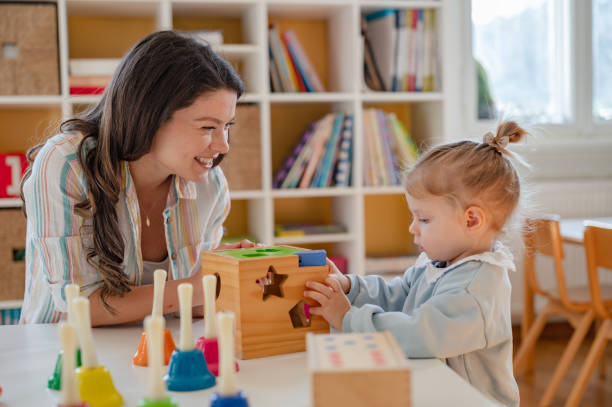
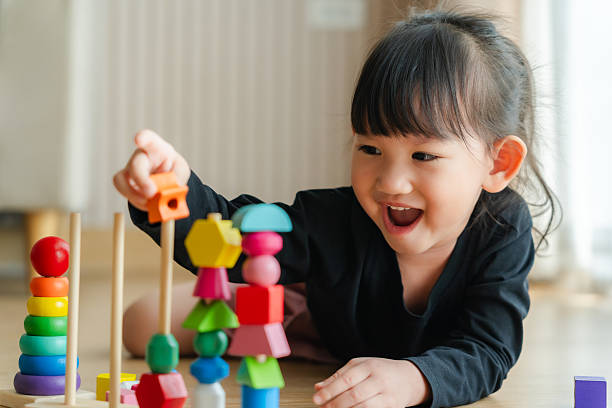
Look at the materials. Montessori materials are distinctive , wooden, hands-on, and self-correcting, meaning a child can often see their own mistake and fix it without needing a teacher to point it out.
Ask about the daily schedule. A genuine Montessori program protects that long, uninterrupted work period rather than breaking the day into short, disconnected activities.
Trust your instincts about the community. You’ll be dropping your child off here regularly, so the warmth of the staff and the comfort your child shows during a visit matter just as much as the curriculum on paper.
Frequently Asked Questions
What age can my child start at a Montessori school Alexandria, VA?
Most Montessori programs welcome children starting around eighteen months to two years, with a full early childhood classroom typically serving children from about two and a half through six years old.
How is a Montessori preschool curriculum different from a traditional preschool curriculum?
A Montessori preschool curriculum lets children choose their own activities from a set of hands-on materials, learning through exploration rather than following a single teacher-led lesson at a fixed pace.
Do Montessori schools really help with social and emotional development, or is that just marketing?
Mixed-age classrooms, calm teacher modeling, and daily practice resolving small conflicts are built into the Montessori day, which is why social and emotional development is treated as a core outcome, not an add-on.
Is a Montessori child program only a good fit for certain personality types?
No. Because children choose activities that match their own interests and pace, Montessori works well for both quieter, methodical children and more energetic, curious ones.
How many days a week should my child attend a Montessori program?
This depends on your child’s age and your family’s needs. Many programs offer both part-time and full-time schedules, and a school visit is the best way to ask what rhythm would suit your child.
Supporting Your Child’s Montessori Journey
Choosing an early childhood program involves more than comparing academic activities. It means finding an environment where a child feels safe, respected, capable, and motivated to explore. Montessori education supports this goal through hands-on learning, purposeful routines, individualized guidance, and opportunities to develop independence.
Montesshare provides a licensed, home-based Montessori preschool environment in Alexandria, Virginia, with a small student-to-teacher ratio, Spanish enrichment, Practical Life activities, and support for social and emotional development. Families interested in the program can explore the curriculum and admissions process to decide whether Montesshare is the right fit for their child.