Montessori Early Childhood Education: A Parent's Guide to Preschool Learning at Home and in School
Posted on September 04, 2026
The early years are an important period for cognitive, physical, social, and emotional development. During this time, everyday experiences can help shape a child’s curiosity, confidence, concentration, and relationship with learning. Montessori early childhood education has built its entire philosophy around this window of opportunity. This guide walks you through what it actually means, how it plays out in a preschool program, and how you can bring some of its ideas home, even before your child steps into a classroom.
What Is Montessori Early Childhood Education, Really?
At its heart, Montessori early childhood education is built on one simple observation: children are natural learners. Left in an environment that’s suited to their size, their pace, and their interests, they don’t need to be constantly instructed, they need to be given the right tools and the freedom to use them.
This is very different from a traditional classroom model where a teacher leads the whole group through the same activity at the same time. In a Montessori setting, the teacher (often called a “guide”) observes each child closely, understands where they are developmentally, and introduces new materials only when the child is ready for them. The result is a classroom that feels calm and self-directed, even though every corner of it
The Montessori Preschool Program: What Children Actually Do
Walk into a Montessori preschool program and you won’t see rows of desks or a single lesson happening at the front of the room. Instead, you’ll see children moving between different activity areas, each one designed around a specific area of development:
- Practical life activities, pouring, spooning, buttoning, sweeping, that build fine motor skills and a sense of independence.
- Sensorial materials, objects that isolate one quality like size, color, or texture, that lay the groundwork for later math and science concepts.
- Language activities, sandpaper letters, storytelling, vocabulary-rich conversation, that build reading readiness naturally, without flashcards or drills.
- Early math materials, hands-on tools like number rods and bead chains that let children physically feel quantity before they ever see a number on paper.
- Cultural and nature studies, simple introductions to geography, plants, animals, and different cultures, which nurture curiosity about the wider world.
Children aren’t rushed through these areas. They can spend fifteen minutes or an hour on an activity, repeating it as many times as they like. This repetition isn’t a sign of being “stuck”, it’s exactly how Montessori preschool learning happens. Mastery comes from a child choosing to practice something until it clicks, not from being told to move on to the next worksheet.
Bringing Montessori Principles into the Home
Not every family enrolls their child in a formal program right away, and that’s completely fine. Parents can also introduce Montessori-inspired activities at home, either before preschool begins or alongside a formal Montessori preschool program.
The good news is that you don’t need a dedicated Montessori room or expensive materials to get started. What matters most is the mindset, not the equipment. A few starting points:
Make everyday objects accessible. Low shelves, child-sized cups, and a step stool at the sink go a long way. When children can reach and use real things themselves, they build competence instead of relying on being helped with everything.
Offer real tasks, not just toys. Washing vegetables, folding small towels, watering a plant, these ordinary chores are deeply satisfying for young children because they feel like meaningful contributions, not games.
Slow down transitions. Rushing a child through getting dressed or leaving the house often creates friction. Building in extra time so a child can do things at their own pace, even if it’s slower than doing it yourself, teaches patience and self-reliance.
Follow genuine interest. If your child is fascinated by insects this week, lean into it: books, a magnifying glass, a walk to look for them outside. Montessori early childhood education thrives on following what naturally captures a child’s attention rather than sticking to a rigid, pre-set curriculum.
Talk, narrate, and listen. Simply describing what you’re doing, “I’m cutting the apple into small pieces”, and giving your child space to respond builds vocabulary and confidence in communication, long before formal language lessons begin.
None of this requires perfection. The goal isn’t to recreate a full Montessori classroom in your living room, it’s to adopt the underlying respect for a child’s ability to learn through doing.
Why the Early Years Matter So Much
Research in early childhood development consistently points to the same conclusion: the years between birth and six are a uniquely sensitive period for building foundational skills, not just academic ones, but emotional and social ones too. Children in this stage are developing their sense of independence, their ability to focus, their comfort with trying and failing, and their early relationship with learning itself.
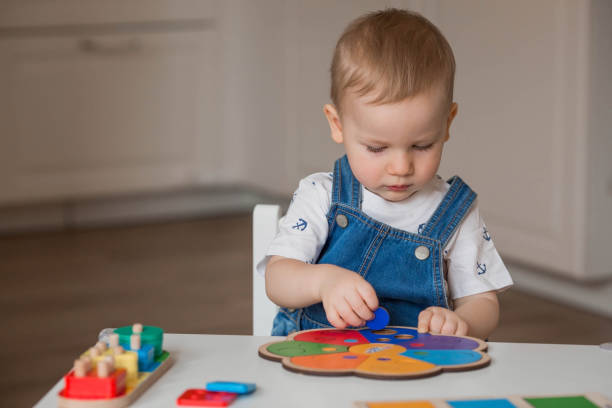
Montessori preschool learning leans into this by treating every activity, no matter how small, as an opportunity for real development. Pouring water isn’t just “playing”, it’s building concentration, coordination, and a sense of accomplishment. A puzzle isn’t just entertainment, it’s problem-solving practice that builds patience and logical thinking.
Over time, consistent opportunities to practise meaningful tasks may help children strengthen concentration, independence, persistence, and confidence when approaching new challenges.
Choosing What's Right for Your Family
Every family’s situation is different. Some parents find a full-time Montessori preschool program is the right fit; others introduce Montessori-inspired routines and activities at home, especially in the earliest years before formal schooling begins; and many combine both, using Montessori principles at home to support what their child is learning at school.
Whichever path you choose, the underlying idea stays the same: children don’t need to be entertained constantly or drilled with worksheets to learn. They need an environment that respects their pace, offers them real and meaningful tasks, and trusts them to explore it with growing independence.
Frequently Asked Questions
What is the main goal of Montessori early childhood education?
The main goal is to support a child’s natural curiosity and independence by offering hands-on materials and a prepared environment, rather than relying only on direct instruction.
Can I start a home-based preschool approach without any formal training?
Yes. A home-based preschool approach is more about mindset than credentials, making everyday tasks accessible, slowing down transitions, and following your child’s genuine interests goes a long way.
How is Montessori preschool learning different from regular preschool learning?
Montessori preschool learning is self-paced and activity-based, letting children repeat and explore materials until a skill is mastered, instead of moving the whole group through the same lesson at the same time.
At what age does a Montessori preschool program typically begin?
Starting ages vary by school and program. Some Montessori environments serve toddlers, while preschool programs commonly serve children during the early childhood years. Families should confirm the current age requirements directly with the school.
Do children need to be enrolled in a Montessori school to benefit from this approach?
No. While a Montessori preschool program offers a fully prepared environment, many of the same principles can be applied at home through simple, practical changes to your daily routine.
Supporting Your Child’s Montessori Learning Journey
Montessori early childhood education recognizes children as capable, curious, and eager to learn through meaningful experiences. By providing hands-on activities, appropriate choices, and enough time to practise new skills, parents and educators can help children develop independence, concentration, confidence, and a genuine interest in learning.
Whether Montessori principles are introduced at home or through a structured Montessori preschool program, consistency and patience are important. Small opportunities to participate in everyday tasks, explore personal interests, and solve problems independently can support a child’s development throughout the early years.