How to Choose the Right Preschool in Alexandria, VA
Posted on August 12, 2026
At Montesshare, the day begins with arrival followed by a short circle time that encourages community connection through songs and shared focus. Children then begin an uninterrupted Montessori work cycle with independent activities, individual lessons, and snacks.
The day also includes outdoor play, community lunch, rest, afternoon Montessori work, enrichment activities, and dismissal. Reviewing the actual schedule can help parents understand how learning, movement, meals, and rest fit together.
Start With What Your Child Actually Needs
Before you tour a single classroom, it helps to picture your child’s day. Do they thrive with quiet, focused activities, or do they need lots of movement and hands-on exploration? Are they naturally independent, or do they need a bit more encouragement to try new things on their own? Every good preschool should be able to answer these questions with more than just a brochure. They should be able to show you, through the environment itself, how a typical day actually unfolds.
This is often where families first discover Montessori education. Instead of a teacher standing at the front of a room directing every activity, children choose their own hands-on work, move at their own pace, and build independence naturally through repetition and discovery. If you’ve been searching for a Montessori preschool near me, you have probably already noticed how different this approach feels compared to a traditional daycare setting. It is less about keeping children busy and more about giving them room to focus, concentrate, and build real confidence in their own abilities.
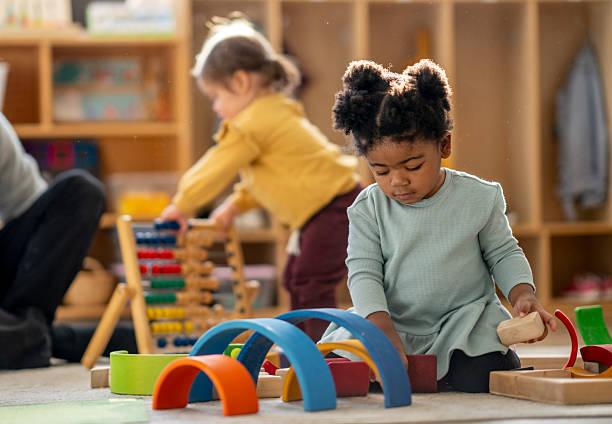
One of the quiet benefits of this approach is that it respects a child’s natural curiosity instead of interrupting it. A young child who is deeply absorbed in pouring water between two small pitchers is not simply playing. They are developing concentration, coordination, and patience at their own pace. Parents who visit a Montessori classroom for the first time are often surprised by how calm and focused the room feels, even with a room full of young children.
Small Groups Make a Big Difference
One thing parents don’t always think to ask about until later is class size and teacher ratio. A packed classroom, even with wonderful, well-meaning teachers, makes it hard for any one child to be truly seen. When a classroom is small, teachers have the time and attention to notice the details that matter, which child is ready for a new challenge, which one needs a little more comfort that day, and which one is quietly working through a tough moment.
Look for programs with a low student-to-teacher ratio, where your child isn’t just one of many, but a known, supported individual with their own pace of learning. Ask how the school handles days when a child is having a hard time separating from a parent, or struggling with a transition. The answer will tell you a lot about how closely teachers are actually paying attention day to day, not just during a scheduled tour.
Smaller settings also tend to build a stronger sense of community. Parents get to know each other, and teachers become familiar, trusted faces rather than rotating staff, a kind of consistency that matters enormously for young children.
Why Some Families Choose a Home-Based Setting
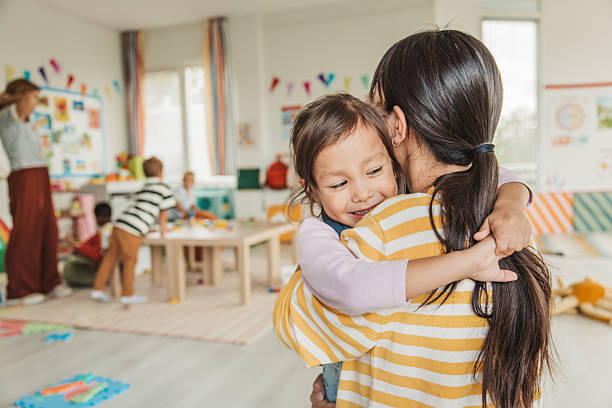
Not every preschool has to look like a large institutional building with long hallways and rows of classrooms. A home-based preschool offers something different, a warm, intimate environment where children aren’t lost in a crowd. For many families, especially those with young children entering a preschool environment for the first time, this softer, more personal setting makes the goodbye at drop-off a lot easier, for both parent and child.
There is something naturally comforting about a space that feels more like a home than an institution. Children often settle in faster, cry less at drop-off, and adjust more smoothly to the new routine, because the environment itself feels familiar rather than overwhelming. A smaller, home-like setting can also make it easier for teachers to build close, individual relationships with each family, since there are simply fewer children and fewer parents to get to know.
It’s worth visiting in person if you can, rather than relying only on photos or a website. Notice how the space feels when you walk in. Is it calm? Organized? Does it feel like somewhere your child could feel safe and curious at the same time? Pay attention to small details too, how toys and materials are stored, whether the space feels cluttered or thoughtfully arranged, and how the teachers greet you and your child when you arrive.
Language Learning Starts Earlier Than You Think
Early childhood is one of the best windows for a child to pick up a second language naturally, almost like a sponge. That’s why more parents are drawn to a Montessori preschool bilingual program, where Spanish (or another language) is woven into everyday activities rather than taught as a separate “class.” Children absorb vocabulary, pronunciation, and even cultural awareness simply through daily exposure: songs, stories, and conversation woven into their regular routine.
Young children are remarkably good at picking up new sounds and language patterns before the age of six or seven, often without any formal instruction at all. A bilingual classroom takes advantage of this natural window, using the language in real context rather than through flashcards or drills.
You don’t need a language background yourself for your child to benefit. In fact, many parents say this is one of the most exciting parts of watching their child grow in a bilingual environment, hearing new words come home that even they didn’t expect. It is not uncommon for a young child in a bilingual program to start counting, singing, or naming everyday objects in two languages within just a few months, simply from being immersed in an environment where both languages are treated as completely normal parts of daily life.
What Daily Life Looks Like in the Classroom
A typical day usually opens with a calm, unhurried start, children arriving, settling in, and choosing their first activity of the morning rather than being herded into a group circle right away. This quiet beginning matters more than it might seem. It gives each child a chance to transition at their own pace, rather than being expected to switch instantly from home mode to school mode.
From there, most of the morning is built around focused, hands-on work time, when children move between activities on their own, with teachers observing and gently guiding rather than directing every minute. Group activities like songs, stories, or a shared snack usually happen later, once the classroom has settled into its rhythm. Outdoor time, whether in a yard or a nearby park, is treated as just as important as time spent at a table, since movement and fresh air play a real role in how well young children focus and regulate their emotions.
Naptime and meals are handled with the same intentionality. Rather than a rigid, one-size-fits-all schedule, many schools build in some flexibility for children who nap longer, eat more slowly, or simply need a few extra minutes to wind down. Ask a school to walk you through an actual daily schedule, not just a general description, so you can picture exactly how your child’s day would unfold from drop-off to pickup.
How Teachers Support Social and Emotional Growth
Academics are only part of what happens in a strong preschool classroom. Just as important is how a school helps children navigate sharing, waiting, frustration, and the everyday friction of being around other kids for the first time. Watch for how teachers handle a disagreement between two children during a tour, do they step in and solve it for the children immediately, or do they guide the children toward working it out themselves with support.
This distinction matters more than it might seem. Children who are given the language and the space to name their feelings, try a solution, and ask for help when they need it tend to build genuine emotional skills, not just good behavior in the moment. Ask how a school approaches conflicts between children, how they talk about big feelings like frustration or disappointment, and how they celebrate a child’s effort rather than only the end result.
This kind of steady, patient guidance is often what parents remember most fondly years later, not a specific lesson or worksheet, but the way a teacher knelt down, listened, and helped their child feel understood on a hard day.
What Local Alexandria Families Should Keep in Mind
Families searching for a preschool in Alexandria often have a few extra practical questions worth sorting out early, alongside the educational ones. Consider your actual commute, both to drop-off and pickup, and whether the school’s hours realistically match your work schedule, including what happens on days you are running late. Ask about closures for holidays, teacher training days, and weather, since these vary quite a bit between schools and can catch new families off guard.
It also helps to ask current or past families about their experience, if the school can connect you with a reference. A conversation with another parent, even a short one, often surfaces details that never come up on a tour, how the school actually communicates when something goes wrong, how flexible they are with schedule changes, and how your child’s personality specifically was understood and supported over time.
Trust Your Instincts, Too
It helps to know what a healthy transition into preschool actually looks like, so you are not caught off guard by normal, temporary bumps along the way. Some tears at drop-off, especially in the first week or two, are completely normal and do not necessarily mean the school is a poor fit. What matters more is how quickly a child settles once the parent leaves, and how the teachers handle that adjustment period.
A good school will usually offer some kind of gradual transition, whether that means a shorter first day, a parent staying briefly during the first visit, or simply a consistent morning routine. Ask how the school supports new families during this period, since it often reflects how they will handle challenges throughout the year.
Frequently Asked Questions
At what age can my child start preschool?
Preschool starting ages vary by school and program. Parents should ask about current age requirements, availability, daily routines, and whether the classroom is designed to meet their child’s developmental needs.
What is the difference between Montessori and a traditional preschool?
In a traditional preschool, a teacher usually leads the whole class through the same activity at the same time. In a Montessori classroom, children choose from a range of hands-on materials and work at their own pace, with teachers guiding rather than directing. The environment is designed so children can explore independently, which tends to build focus, patience, and confidence earlier than in a more structured setting.
Does my child need to know Spanish to join a Spanish-enriched preschool?
No. Children do not need previous knowledge of Spanish to benefit from a Spanish-enriched preschool. Spanish can be introduced naturally through songs, stories, cultural activities, and daily interactions.
How do I know if my child is ready to separate from me at drop-off?
Some tears in the first week or two are completely normal and are not a sign that something is wrong. What matters more is whether your child settles once you leave, and how quickly they start engaging with the classroom and teachers. A good school will have a plan for easing this transition, whether that’s a shorter first day or extra reassurance during drop-off, so ask what that process looks like before you enroll.
What should I bring on my first visit or tour?
You don’t need to bring anything more than your questions and your child, if you’d like them to come along. Bringing your child can actually be helpful, since you’ll get to see how they react to the space and the teachers in real time, which tells you more than any conversation alone.
How is a home-based preschool different from a daycare center?
A home-based preschool is typically smaller, set in a house-like environment rather than an institutional building, and structured around a specific educational approach such as Montessori. A daycare center tends to focus more on supervision and care throughout the day, while a home-based preschool blends that same warmth with an intentional, structured learning environment.
At the end of the day, no checklist can fully replace how a place feels when you walk in with your child. Do the teachers get down to your child’s eye level when they speak to them? Does your child seem curious rather than overwhelmed by the environment? Many parents describe knowing almost immediately, a mix of the environment, the warmth of the teachers, and simply watching their child settle in and start exploring on their own.
Choosing a preschool is one of the first big decisions you will make for your child’s education, and it is completely normal to feel nervous about it. Take your time, visit a few places, ask real questions, and pay attention to both the details and the overall feeling of each school. Trust the instinct that got you this far as a parent, it is usually right.
Frequently Asked Questions