Why Social and Emotional Development Matters More Than You Think
As parents, we spend a lot of time thinking about ABCs, numbers, and school readiness. We ask questions like “Is my child on track academically?” or “Will they be prepared for kindergarten?” But ask any experienced educator and they’ll tell you something surprising: social and emotional development is often the real foundation for everything else a child learns. How a child manages feelings, connects with others, and handles small everyday frustrations shapes how confidently they’ll approach reading, math, friendships, and life in general.
It’s easy to overlook because it doesn’t come with a report card or a test score. There’s no worksheet that measures how well a three-year-old shares a toy, or how gracefully a five-year-old handles disappointment. Yet these are the very skills that shape how a child moves through the world, both in the classroom and far beyond it.
If you’ve been researching Montessori education for young children, you’ve probably noticed that emotional growth isn’t treated as a “side lesson”.
What Does Social and Emotional Development Actually Look Like?
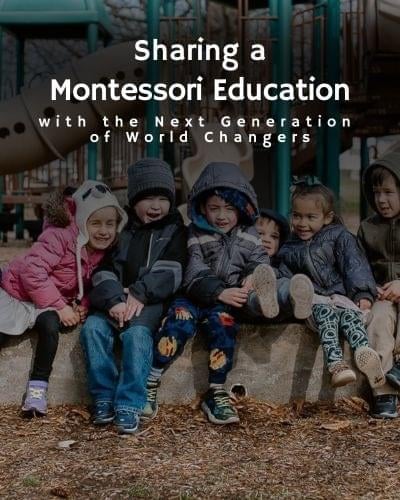
For young children, this isn’t about big dramatic milestones. It’s not a single “aha” moment where a child suddenly becomes empathetic or patient. Instead, it shows up gradually, in small, everyday moments that are easy to miss if you’re not paying attention:
- A young child waiting patiently for a turn with a toy
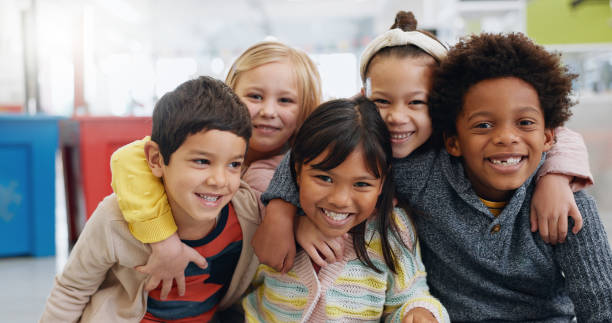
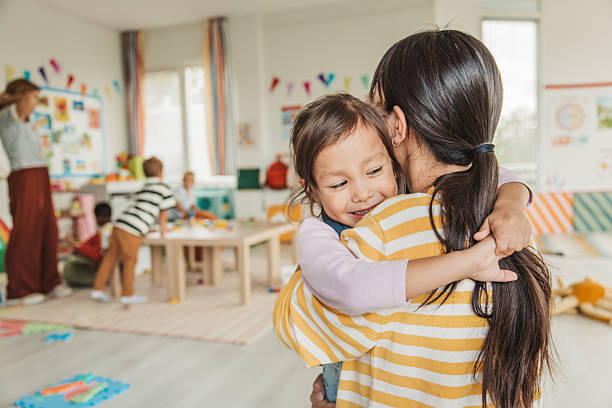
- A preschooler noticing a friend is sad and offering a hug
- A child naming their frustration instead of throwing a tantrum
- Children working together to resolve a disagreement with appropriate guidance
- A shy child slowly finding the confidence to introduce themselves to a new friend
- A four-year-old learning to say “I need a minute” instead of pushing or yelling
These small moments add up. Children who get consistent, gentle guidance in these areas tend to grow into more confident, empathetic, and self-assured individuals. They also tend to do better academically later on, not because emotional skills replace academic ones, but because a child who can regulate their emotions and get along with others is simply better positioned to focus, learn, and take healthy risks in the classroom.
Emotional regulation and social skills can support a child’s wellbeing, resilience, relationships, and readiness to learn. This is why many parents look beyond the curriculum and ask deeper questions when choosing a school. This is exactly why so many thoughtful parents look beyond just curriculum and ask deeper questions when choosing a school for their child.
How Montessori Naturally Supports This Growth
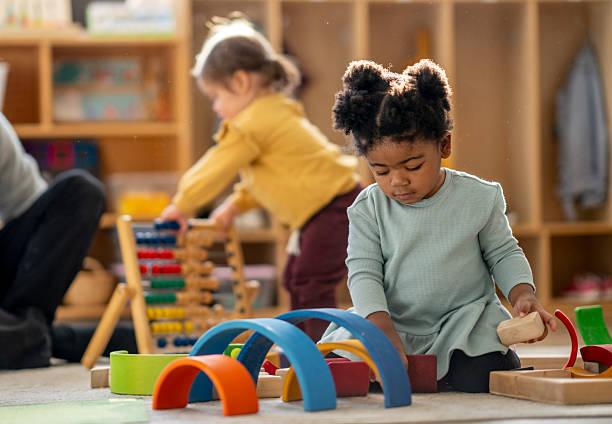
One of the reasons families are drawn to Montessori preschool learning is because emotional and social skills aren’t taught through worksheets or lectures. They’re practiced in real time, throughout the day, in the natural flow of classroom life. A Montessori classroom isn’t just a place where children learn letters and numbers. It’s a small community where children learn how to be with each other.
Here’s how that actually happens in practice:
Mixed-age classrooms build real relationships
Younger children learn by watching older ones, and older children build confidence and leadership by helping the younger ones. This natural mentorship teaches patience, kindness, and cooperation far better than any workbook could. A four-year-old who helps a younger classmate tie their shoes isn’t just being kind, they’re practicing empathy, responsibility, and communication all at once. And the younger child, in turn, learns to trust and rely on their peers, not just adults.
Freedom within structure teaches self-regulation
Montessori classrooms give children the freedom to choose their own activities, but within a calm, structured environment. This balance helps children learn to manage their own impulses, make decisions, and take ownership of their actions. All of this builds core emotional skills. Instead of being told exactly what to do at every moment, children learn to listen to their own interests, manage their own time, and handle the small disappointments that come with any choice, like realizing a favorite activity is already being used by another child.
Practical life activities build independence and confidence
Simple tasks like pouring water, buttoning a jacket, or cleaning up after an activity may look small, but they teach children that they are capable. That sense of “I can do this myself” is deeply tied to emotional confidence. When children succeed at these small, real-world tasks, it builds a quiet but powerful kind of self-esteem, one that isn’t dependent on praise from an adult, but comes from genuinely mastering something on their own.
Conflict is treated as a learning opportunity
Instead of adults immediately stepping in to fix every disagreement, Montessori teachers guide children to express their feelings, listen to each other, and find their own solutions, with support close by when needed. Rather than simply saying “stop fighting” or solving the problem for them, teachers ask gentle questions like “How do you think your friend feels?” or “What could we try instead?” Over time, children internalize these questions and begin asking them of themselves.
A calm, respectful environment sets the emotional tone
Montessori classrooms are intentionally designed to be peaceful, orderly, and beautiful. This isn’t just about aesthetics. A calm environment helps children feel safe, and children who feel safe are far more able to regulate their emotions. Teachers also model calm, respectful communication, which children absorb and begin to mirror in their own interactions with peers.
Why This Matters for Parents Choosing a School
If you’re a parent exploring Montessori schools in Alexandria VA, it’s worth asking not just “What will my child learn?” but “How will my child grow as a person?” A strong program should be able to show you, in concrete ways, how they nurture patience, empathy, communication, and confidence, not just letters and numbers.
When you visit a school, pay attention to the small details. How do teachers respond when two children disagree? Do they rush to solve the problem, or do they guide the children through it? How do older and younger children interact with each other? Is there a sense of calm in the classroom, or does it feel rushed and chaotic? These small observations often tell you more about a school’s true values than any brochure or website ever could.
It’s also worth asking current families about their experience. Ask how their child has grown, not just academically, but emotionally and socially. Has their child become more independent? More patient? More willing to try new things, even when they’re a little scared? These are the kinds of questions that reveal whether a school is genuinely invested in the whole child, not just their test scores.
Emotional Development Doesn't Happen in Isolation
It happens through relationships, daily routines, and an environment where children feel safe enough to try, fail, and try again. No single lesson or activity builds emotional intelligence overnight. It’s the accumulation of hundreds of small, everyday interactions, guided consistently over months and years, that shapes who a child becomes.
This is also why consistency between home and school matters so much. When parents and teachers use similar language around feelings, similar approaches to conflict, and similar expectations around independence, children experience a sense of continuity that makes it much easier for them to internalize these skills.
A Gentle Reminder for Parents
You don’t need to have it all figured out. Every child moves through emotional growth at their own pace, and that’s completely normal. Some children are naturally more cautious, others more outgoing. Some take longer to share, others take longer to sit still. None of this is a reflection of how “well” you’re parenting, and it certainly isn’t something to compare between siblings or classmates.
What matters most is choosing an environment, whether at school or at home, that treats your child’s feelings with patience and respect, and gives them room to grow into who they’re becoming. Children thrive when the adults around them believe in their capability while still offering steady, loving guidance.
If you’d like to see how this looks in practice, we’d love to have you visit and experience a Montessori classroom firsthand. Sometimes seeing it is the best way to understand it. Watching children move calmly through their day, resolve small conflicts on their own, and help each other without being asked often says more than any conversation ever could. It’s one thing to read about social and emotional development, and quite another to see it quietly unfolding in a room full of curious, capable, kind children.
Frequently Asked Questions
What age should social and emotional development start being a focus?
Social and emotional development begins at birth and continues throughout childhood. During the early years, children actively practise sharing, waiting, communicating their feelings, and building relationships with others.
How is emotional development different from just discipline?
Discipline is often about correcting behavior in the moment. Emotional development is about building the underlying skills, like self-awareness, empathy, and self-regulation, so children naturally make better choices over time. One focuses on the moment, the other focuses on long-term growth.
Can emotional skills really be taught, or do children just grow into them?
Both. Children do mature naturally, but the environment around them matters enormously. A calm, consistent, and supportive setting, whether at home or in a classroom, helps children develop these skills faster and more securely than they would on their own.
Why do Montessori classrooms use mixed ages instead of grouping by age like traditional schools?
Mixed-age groupings mirror real family and community life. Younger children learn by observing older ones, and older children reinforce their own understanding by helping younger peers. This naturally builds patience, leadership, and empathy in a way that same-age classrooms often can’t replicate.
What should I look for when visiting a Montessori school to see if it supports emotional growth?
Watch how teachers respond to conflict, how calm the room feels, and how children interact across age groups. A strong program will guide children through their feelings rather than simply managing behavior, and you should be able to see that difference within a few minutes of observing a classroom.
How can I support social and emotional development at home?
Simple, consistent habits help most: naming feelings out loud, giving your child small responsibilities, allowing them to solve minor problems on their own, and modeling calm communication yourself. Children absorb far more from what they observe than from what they’re told.