Power of the Montessori Method - How It Builds Confidence and Independence
Posted on November 17, 2025
In today’s fast-paced world, parents and teachers are looking for ways to help children become confident and independent. Early childhood is an important time, as children grow and learn faster than at any other age. During these years, they explore their surroundings, understand how society works, and develop important critical thinking skills.
Today’s parents are looking for an educational approach that fosters creativity, independence, and confidence in their children. Among the various approaches that exist, the Montessori Method is one approach that has gained a reputation for the benefits it offers.
Understanding Early Childhood Education
Preschool learning should play a vital role in the life of each child. It’s not just a daycare for working parents. Emotional, social, mental, and physical growth are all inspired by an excellent and intentional preschool experience. Children engage in activities that teach problem-solving, foster interest, and promote learning.
Choosing a childcare community that focuses on these skills helps a child grow in freedom and responsibility. One advantage of this type of preschool is that children have numerous opportunities to learn at their own pace. One widely used teaching practice that goes along with this belief is the Montessori Method.
Key Principles of the Montessori Method
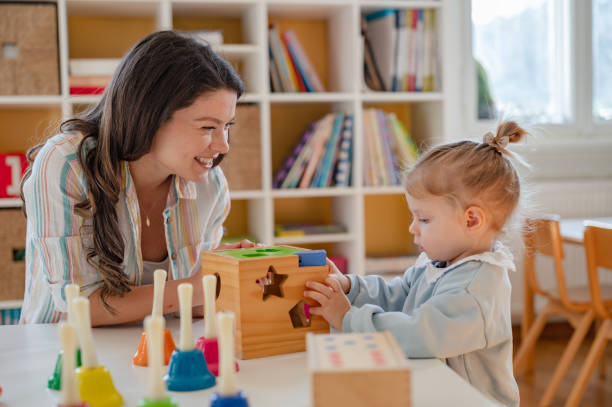
The Montessori Method focuses on direct experiences and independent activities. The philosophy differs from the traditional classroom structures where the teachers lead learning; rather, children explore materials and ideas on their own. Key elements of this method include:
1. Child-led Learning:
Children are free to choose various activities that interest them, which leads to children being more engaged in their learning and discovery, as well as fostering intrinsic motivation.
2. Prepared Environment:
The classrooms are well prepared, and materials are available and accessible to the children to foster independence in learning.
3. Mixed Age Classrooms:
Children of different ages learn in the same settings and hence are encouraged to learn from their peers, as well as acquire important social skills.
4. Guidance Rather than Instruction:
Teachers act as guides rather than controllers in the children’s learning processes.
Children learn to take the lead when working with other peers, which is crucial for their future academic and personal success.
Features of Quality Early Learning Programs
Finding a suitable care program is essential to a child’s growth. A high-quality program offers a well-organized yet flexible environment for children. Some other benefits of a high-quality child care program include:
- Social Skills: Children learn how to share, communicate well, and solve issues.
- Mental Growth: Children experience growth in the areas of logic, decision-making, and problem-solving skills.
- Emotional Development: Children develop awareness and learn how to manage their emotions.
- Physical Development: Playing and hands-on activities develop their fine and gross motor skills.
Preschool learning forms a foundation for lifelong learning. Well-structured programs increase the chances of children experiencing success in both academic and social spheres because confidence and independence are developed early on.
How the Montessori Method Enhances Child Development
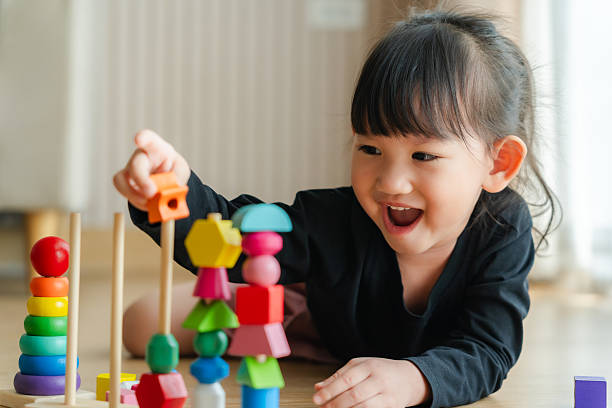
The Montessori Method elevates preschool education to a new level. By giving children the liberty to follow their interests and set their own pace, this approach fosters a love for learning. The hands-on materials in Montessori classrooms are designed to make abstract concepts tangible and thus easy for children to grasp.
For example, most materials, including in mathematics, language, and practical life, are designed to be engaging and self-correcting. Therefore, children learn through exploratory attempts and not through rote memorization. They also develop problem-solving skills, concentration, and fine motor control, which are valuable in both academics and practical living.
Another powerful aspect of Montessori learning has to do with emotional and social development. Children learn to respect others, collaborate, and develop emotional intelligence. These skills really help in forming relationships that last and give one the ability to navigate successfully within a myriad of social situations.
Selecting a Suitable Preschool for Your Child
The process of selecting a preschool for your child requires careful and extensive thought. A preschool program should be balanced between structure and freedom, within which safety and stimulation ensure all-around development. Some factors include:
Curriculum approach: Essentially, look for those programs that correspond to your child’s learning style and developmental needs. The Montessori Method is ideal for children who learn well via self-directed, hands-on activities.
1. Teacher Child Ratio: Smaller class sizes allow for customized instruction and support.
2. Environment: The learning environment should be well-organized, inviting, and full of suitable materials for all ages.
3. Parental engagement: Programs that involve parents strengthen home support and build better connections.
Visiting and observing classrooms, as well as inquiring about instructional teaching methods and curriculum, can help parents clarify the best fit for their child.
The Role of Teachers in Montessori Learning
The role of the teacher is very different in a Montessori classroom compared to a traditional preschool classroom. Montessori teachers are called guides and serve as facilitators rather than instructors. As the title suggests, each child will be observed, and instruction will guide them in working at their own speed and interest. In this way, children are empowered to take ownership of their work, building independence and self-confidence.
Additionally, teachers are specially trained in the Montessori Method. They know how to set up a prepared environment, choose appropriate materials, and provide instruction without making the children dependent on the teachers. The teachers’ extensive training helps a child receive the full benefit from the early years of education.
Encouraging Learning at Home
The Montessori Method’s basic principles also transfer beautifully to a home environment. Parents can easily facilitate a supportive learning environment by:
- Providing hands-on activities for children to explore and experiment.
- Encouraging independence by allowing children to do things for themselves.
- Offering choices during daily routines to empower decision-making practices.
- Encourage curiosity through questions, discussions, and explorations.
Parents complement their child’s preschool instruction by reinforcing these principles at home and creating a continued enthusiasm for learning.
Conclusion
Preschools nurture children the whole-child in their mental, social, and emotional developments.
Montesshare is a preschool that provides care to your child, where they will learn, explore, and grow at their own pace. Our small classroom gives each child the opportunity to receive the attention and guidance needed from our experienced, AMS-certified teacher.
We guarantee a safe environment with activities that foster children’s learning, self-esteem, and welfare. We are proud to offer preschool tuition military assistance through Child Care Aware and MCCYN. Apply now since spots are limited. Give your child a joyful and confident start to learning that will inspire their interest.