How a Montessori Preschool Curriculum Supports Child Development
Posted on October 19, 2026
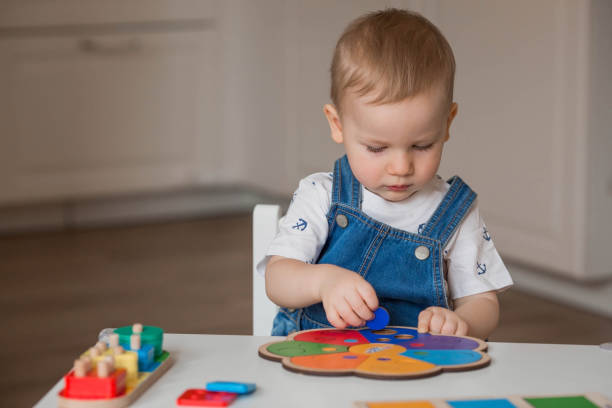
If you have toured a few preschools, you have probably noticed that a Montessori classroom looks different. Instead of rows of desks and whole-class lessons dominating the day, children typically move between accessible shelves, choose hands-on materials, and work independently or in small groups.
That calm, purposeful environment reflects the Montessori preschool curriculum, which is designed to support how young children learn and develop. Below, we explain what the curriculum includes, how it supports different areas of child development, and what to look for when choosing a Montessori preschool near you.
What Is a Montessori Preschool Curriculum?
A Montessori preschool curriculum is a hands-on learning framework developed by Dr. Maria Montessori for children roughly 2.5 to 6 years old. It is built on one idea: young children learn best when they can choose meaningful work, use their hands, and repeat an activity until they master it.
Rather than following a fixed weekly lesson plan for the whole class, teachers observe each child and introduce new materials when that child is ready. The result is a curriculum that is structured in content but individual in pace.
The Five Core Areas of Montessori Preschool Learning
Montessori early childhood classrooms typically organize learning into five interconnected curriculum areas, supported by carefully sequenced, hands-on materials.
1. Practical Life
Pouring water, buttoning a frame, sweeping, washing a table, preparing a snack. These everyday tasks build fine motor control, concentration, and independence. They also teach a child to follow a sequence from start to finish, which is the foundation of all later academic work.
2. Sensorial
Sensorial materials help children sort and name what they experience through their senses. The Pink Tower teaches size, the Color Tablets teach shade, and the Sound Cylinders teach listening. Children learn to compare, classify, and notice detail, skills that feed directly into math and reading.
3. Language
Language begins with conversation, vocabulary, and stories. Children then trace Sandpaper Letters to connect sounds with shapes and build words with the Moveable Alphabet. Many children write before they read, because composing words with letters comes naturally once the sounds are familiar.
4. Mathematics
Montessori math starts concrete. Children count Number Rods, hold Golden Beads in their hands to feel the difference between one, ten, a hundred, and a thousand, and later use these same beads to add and subtract. Children gradually connect concrete materials with mathematical symbols, developing a deeper understanding of numbers and operations.
5. Cultural Studies
This area covers geography, science, botany, zoology, art, and music. Children work with puzzle maps, sort living and non-living things, care for plants, and learn about cultures around the world. It is where curiosity about the wider world takes shape.
How a Typical Day Works
A central feature of Montessori preschool learning is the uninterrupted work cycle, a dedicated period when children choose meaningful activities within a carefully prepared environment. Work cycle lengths vary by school, but the goal is to give children sufficient time to concentrate, repeat activities, and work independently.
During the work cycle, a child might:
- Choose a practical life activity to settle in
- Receive a short one-on-one lesson with a new math material
- Repeat that material several times on their own
- Help a younger classmate find a puzzle map
- Return the work to the shelf, ready for the next child
The teacher moves around the room giving small lessons, observing, and keeping notes on each child’s progress. There is no rush to finish and no pressure to keep up with a group.
How the Montessori Preschool Curriculum Supports Child Development
Montessori preschool learning does not treat academics, movement, and emotions as separate subjects. Each material and routine supports several areas of development at once.
- Cognitive development. Sorting, sequencing, and comparing with sensorial and math materials builds reasoning, memory, and problem solving. Children who are allowed to finish what they start also learn to concentrate for longer periods.
- Language development. Rich conversation, new vocabulary, Sandpaper Letters, and the Moveable Alphabet move children naturally from speaking to writing and reading.
- Physical development. Pouring, spooning, buttoning, and carrying materials across the room refine fine and gross motor control, including the hand strength needed for writing.
- Social-emotional development. Mixed-age groups, grace and courtesy lessons, and shared classroom care teach patience, empathy, and respect for others.
- Independence and self-regulation. Freedom within clear limits lets children make choices, manage their own work, and build real confidence in what they can do.
What to Look for in a Montessori Preschool Near You
The word Montessori is not trademarked, so any school can use it. When you search for a Montessori preschool near me, use this checklist to separate authentic programs from those using the name only:
- Montessori-trained teachers. Ask whether the lead teacher holds a recognized Montessori teaching credential, such as one issued through an AMS-affiliated teacher education program.
- Authentic materials. Look for the classic wooden materials on open shelves that children can reach themselves.
- A prepared environment. The room should be calm, orderly, and sized for children.
- Long work periods. Ask about the daily schedule. A strong program protects a long, uninterrupted work cycle.
- Small groups and low ratios. Teachers can only follow each child’s pace if they have time to observe them.
- Accreditation and licensing. Verify the school’s state licensing status and ask whether it holds accreditation from a recognized organization. Licensing and accreditation have different requirements and should be evaluated separately.
- Open communication. Good schools share observations and progress with families regularly.
The best test is a visit. Watch how children move, how teachers speak to them, and whether the room feels calm and busy at the same time.
Montessori Preschool Learning at Montesshare, Our Montessori School in Alexandria, VA
At Montesshare, we have been sharing Montessori education with families in the Alexandria area since 2017. Our home-based Montessori preschool in Alexandria, VA, offers a carefully prepared learning environment where children develop independence, concentration, and confidence through hands-on activities.
What sets our program apart:
- AMS certified lead teacher guiding authentic Montessori pedagogy
- NAFCC accredited and state-licensed care
- Exceptionally low ratio of 12 children to 2 to 3 teachers
- Year-round Spanish enrichment woven into the daily work cycle
- Year-round care for working families
Our preschool program serves children ages 2.5 to 6, and each child moves through practical life, sensorial, language, math, and cultural work at their own pace, with Spanish language and culture included throughout the day.
Frequently Asked Questions
At what age can my child start a Montessori preschool curriculum?
Most children begin the preschool curriculum around 2.5 years old and continue through age 6, including the kindergarten year.
Does Montessori prepare children for elementary school?
Yes. Montessori preschool helps children develop foundational literacy, mathematics, concentration, problem-solving, and independence skills that support their transition to elementary education. Individual progress varies based on each child’s developmental needs.
Is Montessori too unstructured?
No. Children have freedom to choose their work, but the materials, sequence, and classroom routines are carefully structured. It is freedom within limits.
How is Montessori different from a regular daycare?
Both Montessori preschools and traditional daycare programs can provide nurturing care and early learning experiences. Montessori preschools specifically emphasize self-directed activities, hands-on materials, individualized instruction, and independence within a prepared environment.
Schedule a Visit